
Local marketing for doctors, clinics and hospitals

Digital marketing for hospitals

In short: patients choose a hospital for its doctors and treatments, so every department and every panel doctor should be visible online. We build a website page for each doctor and department, set up the main and department profiles on Google, run social media that features every doctor, help each doctor post at least one short video a month, and manage reviews and ads by department.

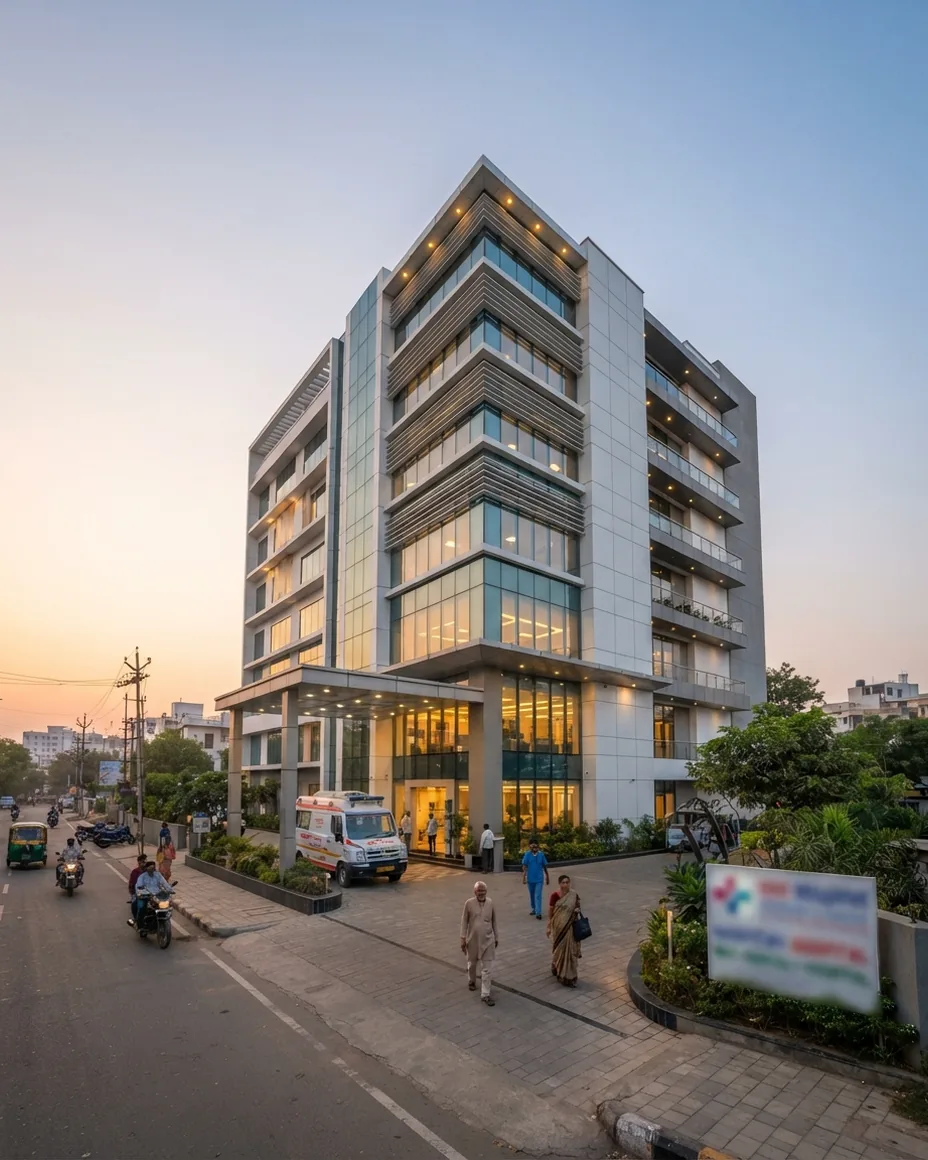
Hospital building entrance
What we see

Where hospitals lose patients online.

Hospitals have more to show than any clinic: departments, specialists, equipment. Online, most of it is invisible.

One generic website

A single page listing twenty departments in one line each. Patients searching for a knee replacement or a cardiologist find nothing specific.

Doctors missing or outdated

Half the panel isn't on the website, and some who left two years ago still are.

Only the hospital gets promoted

Social media shows the building and festival greetings. The doctors, who patients actually choose, never appear.

One pile of reviews

Emergency, OPD and billing complaints mixed together, with nobody reading them by department.

Wrong emergency details

An old emergency number or wrong hours on Google, at the one moment it matters most.

Doctors competing with the hospital

Doctors' own listings and pages that pull patients away instead of pointing them to the hospital.

Promote the people

Every doctor and every treatment, visible.

A hospital is chosen for its doctors and its treatments. Both should be visible everywhere patients look:

  • A website page for every panel doctor: qualifications, registration number, OPD days, languages and what they treat.
  • A page for every department and major treatment, with what to expect and cost ranges where possible.
  • Every doctor and every department shown on social media in a factual, educational way, not just the building. The NMC guidelines don't allow a hospital to promote one doctor in a promotional way, so we introduce doctors through what they explain, not through praise.
  • Each doctor posting at least one 2 to 5 minute video a month, answering what their patients ask. With a large panel, this adds up quickly and works very well.
Before admission

The pages families look for, and rarely find.

For a planned surgery or a delivery, families research the practical side as carefully as the doctor. Most hospital websites leave them to call and ask. Each of these pages answers a question the front desk hears every day.

Cashless and insurance

The insurers and TPAs you're empanelled with, the pre-authorisation steps and the documents needed. “Is this hospital cashless for my policy?” is one of the first questions families ask.

Government schemes

If you're empanelled under Ayushman Bharat PM-JAY, CGHS or ECHS, say so clearly, with the departments covered. Patients search using these names.

Health check-up packages

Each package with the tests included, the price, fasting instructions and when reports are ready. A vague “full body check-up” page doesn't get bookings.

Room types and tariffs

General ward, semi-private and private rooms, with what each includes. Families compare these before a planned surgery.

Emergency information

A 24x7 number, the emergency entrance on a map and what to bring. This page must load quickly on a weak mobile signal.

Visitors and attendants

Visiting hours, attendant passes, parking and food. Small details, but they're asked on the phone all day.

By department

What patients search, and what the page needs.

Each department attracts different searches. A department page earns its place in Google when it answers the questions behind them.

DepartmentWhat patients searchWhat the page needs
Orthopaedicsknee replacement cost, orthopaedic doctor near meSurgeon profiles, a cost range, days in hospital, recovery timeline, cashless details
Maternity and gynaecologynormal delivery cost, maternity hospital near mePackage inclusions, NICU availability, room and labour room photos, doctors on call
Cardiologycardiologist near me, angioplasty costCath lab and 24x7 cover, the team, what happens when you arrive with chest pain
Emergencyhospital near me open now, emergency hospitalCorrect 24-hour status on Google, one working phone number, directions to the right gate
DiagnosticsMRI scan cost, CT scan near meTest prices, timings, how soon reports are ready, whether a prescription is needed
Health check-upsfull body check-up priceTests in each package, price, fasting instructions, home sample collection if offered

Common searches in the cities we work in. The audit shows the actual demand in yours.

The set-up

What we build for a hospital.

  • Main hospital profile

    Complete Google profile with every department listed as a service, real photos and correct emergency details.

  • Department and practitioner profiles

    Where Google allows them, set up to support the main profile, not compete with it.

  • Doctor and department pages

    One page per doctor and per department, with Physician and Hospital schema.

  • Social media for the whole panel

    A calendar that features every doctor and treatment in turn.

  • Doctor video programme

    A monthly topic plan per doctor; clips recorded on a phone, with editing available as an add-on.

  • Review routine at scale

    Requests at OPD billing and discharge, replies within 48 hours and reporting by department.

  • Google Ads by department

    Separate budgets for departments with the most search demand, such as orthopaedics or maternity.

  • Monthly report

    Enquiries, calls and reviews by department and location, in one place.

Approvals

Getting content approved without months of delay.

In hospitals, marketing rarely stalls for lack of ideas. It stalls waiting for sign-off from several people. We agree this process with management in the first week.

1
Week 1

One approver per department

A named person, usually the head of department or someone they nominate, signs off that department's content. No committee.

2
Once a month

Approve the calendar in one go

Topics and doctor videos for the month approved in a single sitting, not post by post.

3
Before publishing

Medical fact-check

Each doctor checks anything about their own specialty, once, before it goes out.

4
Agreed in advance

A clear time limit

Routine posts go ahead if there's no reply in an agreed time. Anything about prices, outcomes or new services always waits for approval.

When things go wrong

Handling a complaint that goes public.

Sooner or later every hospital faces it: an angry review after a death or a large bill, a video on social media, a local news story. What's said in the first few hours matters most.

  • One short public reply from a named department, saying you're looking into it and giving a direct contact. No arguments in public.
  • Never discuss a patient's treatment online, even to defend the hospital. Confidentiality applies to replies too.
  • Take it offline: a senior person calls the family the same day.
  • Don't ask staff to post positive reviews to push it down. Google's review policy, tightened in April 2026, treats staff reviews as a clear violation.
  • Report only reviews that actually break Google's policies, such as those from people who were never patients, or that contain abuse.
  • Afterwards, review what happened internally. If something was fixed, add a short, factual update to your reply.

General guidance, not legal advice.

The rules

What hospitals can advertise.

The NMC's guidelines of 6 October 2026 now cover hospitals directly. A hospital can share factual and verifiable information: its name, location, contact details, departments, facilities, equipment, emergency services, accreditation and charges (clauses 8.3 and 9.1). A directory of doctors on the hospital website is treated as patient information, not advertising.

What a hospital can't do is solicit patients, offer inducements like discounts or free procedures that push people into unnecessary tests, claim to be the best or the leading hospital without independent proof, or portray one doctor in a promotional way. Patient testimonials, before-and-after images and guaranteed outcomes are also out. And the guidelines say the hospital, the doctors and the agency running the marketing are all responsible, so we check every post and ad against these rules before it goes out.

Read the details in our guide to the NMC advertising rules.

General guidance, not legal advice.

Questions

Questions from hospitals.

Should each department of a hospital have its own Google profile?

Only where Google's rules allow it: a department with its own public entrance and distinct services, such as emergency or a diagnostic centre, can have a separate profile. Doctors who see patients can have their own practitioner profiles. Everything else belongs on the main hospital profile.

Why should every panel doctor have a page on our website?

Patients often choose the doctor before the hospital. A page for each doctor, with qualifications, registration number, OPD days and the conditions they treat, lets the hospital appear when patients search a doctor's name or specialty, and gives Google and AI assistants clear facts to work with.

Should we put cashless and insurance details on the website?

Yes. A page listing the insurers and TPAs you're empanelled with, the government schemes you accept and the pre-authorisation steps answers one of the first questions families ask, and helps you appear for searches like “cashless hospital near me”. Keep it current; an outdated list leads to angry reviews at the billing desk.

A family has posted an angry review after a death. What should we do?

Reply once, briefly and respectfully, with a named contact, and move the conversation offline the same day. Don't discuss the patient's treatment in public. Don't ask staff to post positive reviews to bury it, which breaks Google's rules. Report the review only if it actually breaks Google's policies.

How often should our doctors post videos?

At least one 2 to 5 minute video per doctor per month. With a panel of 20 doctors, that's a steady stream of expert content no single-doctor clinic can match. Doctors record on a phone; editing is available at ₹800 per minute.

Can hospitals advertise in India?

Yes, but only with factual, verifiable information. The NMC's October 2026 guidelines allow a hospital to share its departments, facilities, equipment, emergency services, accreditation and charges. They don't allow solicitation, discounts or free offers that push unnecessary treatment, unproven "best" or "leading" claims, testimonials, or promoting an individual doctor in a promotional way.

How do you handle reviews for a large hospital?

With a routine at OPD billing and at discharge, one team replying to every review within 48 hours, and a monthly report by department so you can see where complaints come from.

What does hospital marketing cost?

It depends on the number of locations, departments and doctors. Google profiles are ₹6,999 per location per month, social media ₹8,000 per profile, and ads 20% of spend. Websites and SEO are quoted after the audit.

See how your clinic shows up on Google.

Tell us where you practise. We'll send your visibility report on WhatsApp within two working days.

  • GST and MSME registered firm
  • Reply within one working day
  • No long-term contracts

Opens WhatsApp with your details. Used only to prepare your audit. Privacy

Chat on WhatsApp